What Purple Gemstone Exhibits Blue and Pink Hues of Color
Gemstones
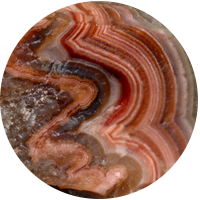 Agate
Agate
Agate is an inexpensive stone that ranges from opaque to translucent in many different colors, including cream, brown, orange and red, and often has bands or stripes. Agate is almost never faceted in to a gemstone, but is often used in gem decor and carvings. If you see agate in bright colors like aqua, hot pink, vivid purple, or lime green, there is a high chance the stone has been color-enhanced to make the dull-colored piece of agate more exciting.
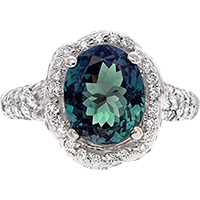 Alexandrite
Alexandrite is a gemstone that displays a strong color change from bluish/greenish to purplish/reddish depending on the lighting.
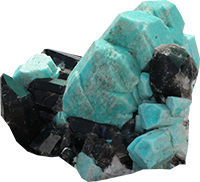 Amazonite
Amazonite is an opaque stone that ranges from green to blue. It is rarely faceted in to a gemstone, but is often used for beads and gem decor.
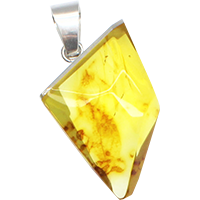 Amber
Amber
Amber is fossilized resin from extinct trees. It is most commonly found in an orange or yellow color, but can also be seen in dark green, lime green, red, brown, cream, and black. Although Amber is almost never faceted, it is a common stone used in jewelry.
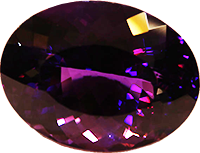 Amethyst
Amethyst is a common type of purple quartz, that ranges from light purple to deep, dark violet. Amethyst gemstones are usually faceted and used in creating jewelry.
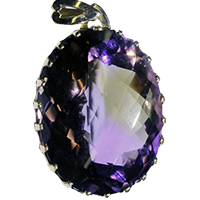 Ametrine
Ametrine is a two-colored gemstone that has both purple and yellow in the same stone. Ametrine is a combination of Amethyst (purple) and Citrine (yellow), that make up its unique colors.
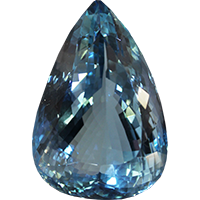 Aquamarine
Aquamarine is a light blue-aqua colored gemstone, and is a type of blue beryl. In folklore, Aquamarine often has ties to the ocean, and its name means 'water of the sea' in Latin.
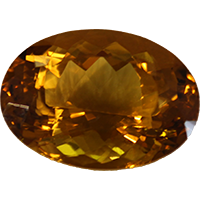 Beryl
Beryl
Beryl is a type of gemstone that comes in many different colors, including yellow, green, blue, pink, colorless and red, and is often faceted into gemstones to be placed in jewelry. Well known varieties of beryl include Morganite (pink), Emerald (green), and Aquamarine (blue/cyan).
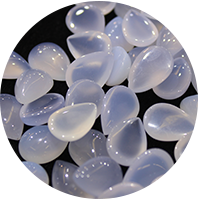 Chalcedony
Chalcedony has a waxy sheen, and is often semitransparent or translucent. Some of the more common varietes of Chalcedony include Agate (brown), Aventurine (green), Carnelian (red), Chrysoprase (green), Onyx (black).
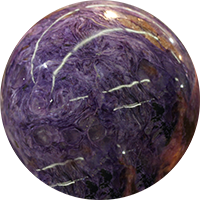 Charoite
Charoite is lavender to purple in color with a pearly sheen. Charoite has an unusual swirling, fibrous appearance that is easy to recognize. Charoite is quite rare, and has only been found in Russia since 1978.
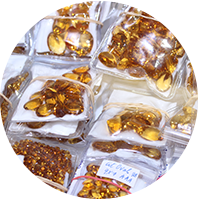 Citrine
Citrine is a variety of quartz that is often used as a gemstone in jewelry, and comes in a range of colors including pale yellow, bright yellow, light orange, dark orange, light brown and dark brown. It is the same stone family as Amethyst and Rose Quartz.
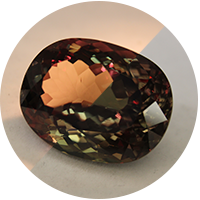 Diaspore
Diaspore is a unique stone that comes in a variety of colors, and may exhibit color change under different lighting. The most well known version of the stone exhibits a dramatic color change from green to red depending on the lighting. Very recently, a rare form of color change Turkish Diaspore was found that changes from red to blue.
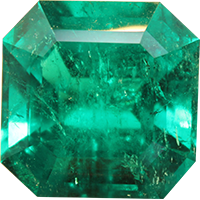 Emerald
Emerald is a green precious gemstone and a type of beryl. Emerald colors range from yellowish-green. to primary green, to blueish-green. Emeralds tend to have numerous inclusions and surface breaking fissures, so unlike most other gemstones, Emeralds are considered flawless if no flaws can be seen with the naked eye. Almost all Emeralds are treated with oil to fill in surface cracks to improve the stone's clarity and stability. In 2016, an exciting new source of Emeralds started appearing at the Tucson Gem Show - Ethiopian Emeralds that required little to no treatment.
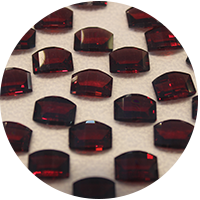 Garnet
Garnets are a red gemstone that range in color from dark red to light orange. Red garnets were commonly inlaid in gold jewelry by the Late Antique Roman world, and are still a common gemstone today, and often acts as a substitute for rubies.
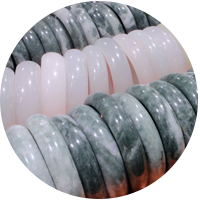 Jade
Jade
Jade is a green mineral that has been used in Asian art for centuries. In gemstone form, Jade is rarely faceted, and is instead smoothed into a rounded cabochon to better display jade's natural "glow". Jade green ranges from a very light pale green, to a translucent apple green, to very dark opaque green.
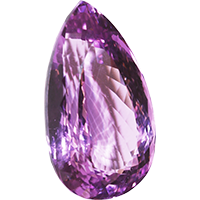 Kunzite
Kunzite is a pink to lilac colored gemstone, discovered in 1902 by Tiffany & Co's chief jeweler. Kunzite is found in Afghanistan, Brazil, Madagascar, and California.
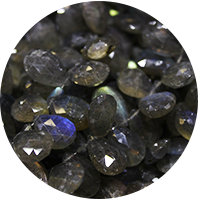 Labradorite
Labradorite is a greyish-black stone that has a unique visual property called labradorescence - an iridescent optical effect that is recognizable by tilting the stone. When tilted, the stone will transform from being dull and dark, to having a mostly blue-green-yellow oil-spill like rainbow shimmer across its surface. Labradorite stones with a high amount of this beautiful optical effect are called spectrolite.
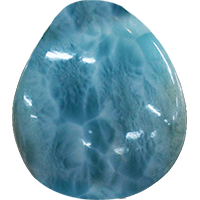 Larimar
Larimar is a blue mineral found only in the Dominican Republic. Higher grade larimar often has a water-like pattern of blue patches separated by white "waves", and the stone was named to suggest the colors of the Caribbean Sea where it was found. The more intense the blue, and the contrast between the white and blue, the rarer the stone.
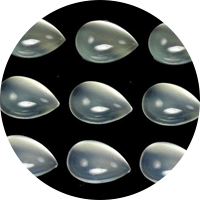 Moonstone
Moonstone is a pale gemstone that shows strong adularescence - an optical effect where light appears to move across the gemstone showing a rainbow of colors, and the gemstone appears to "glow". Moonstone can be transparent, translucent or opaque, and often is found in colorless, white and gray. Moonstone gemstones are most commonly rounded cabochons to better show of their unique optical properties.
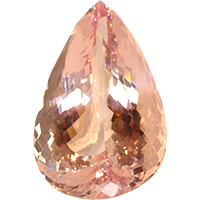 Morganite
Morganite is a pink gemstone that ranges from rare light pink to rose or peach colored, and is the same stone family of beryl, along with Aquamarine and Emeralds. Morganite has become a popular stone recently for engagement and wedding rings, often paired with Rose Gold due to the similarity in their colors.
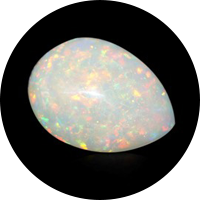 Opal
Opal
Opal is a gemstone that ranges in color from white to black, and every color in between. Opal is most easily recognized by its special optical properties - high quality opal gemstones have a rainbow of color play inside them that looks like glitter or confetti. Opals are almost never faceted, but instead are smoothed into cabochons. Common opal also exists, but does not show a strong display of color play, and comes in a variety of opaque colors including green, white and purple opal.
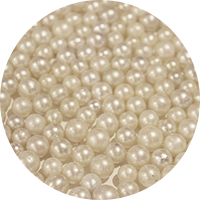 Pearl
Pearl
A pearl is a hard glistening gemstone produced by a living mollusk or other shelled animal. The ideal pearl is round and smooth, but unique pearls with strange shapes, known as baroque pearls, are also desired for their interesting and artistic shape. Pearls come in many colors, including white, cream, peach, gray and black. Genuine pearls are almost always iridescent, with a slight rainbow sheen like the inside of a shell. Round pearls are commonly drilled to create beads, and baroque pearls are often used as focal points of necklaces and earrings.
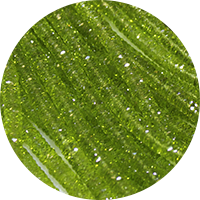 Peridot
Peridot is an olive-green gemstone. Peridot gems can vary from lime green, to yellow-green, to olive, to brownish-green. Peridot can be pronounced two different ways - as "peri-dott" with a T at the ending rhyming with "thought" or "polka dot", or "peri-doh", rhyming with "dough" or "throw".
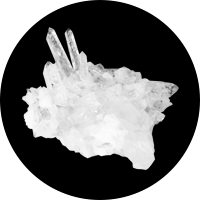 Quartz
Quartz is an extremely common type of gemstone, and comes in a wide variety of colors. Well known quartz crystals include Herkimer Diamonds (colorless), Amethyst (purple), Rose Quartz (pink), Smoky Quartz (gray), Citrine (yellow/orange), though many other colors exist like Green Quartz or Lemon Quartz. High quality gemstone quartz is flawless, transparent, and faceted.
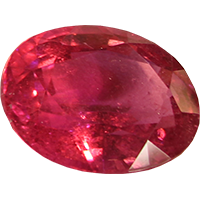 Rubellite
Rubellite is a pink/red gemstone from the Tourmaline family. Rubellite ranges in color from light pink, to violet, to crimson red with purple.
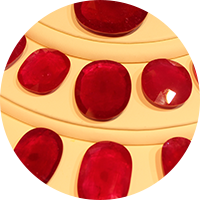 Ruby
Ruby
Rubies are a red gemstone from the same family as Sapphires, the corundum family. Rubies range in color from red-pink, to red, to dark red. Almost all natural rubies have imperfections in them, including color impurities or rutile needles. Gemologists use these inclusions found in natural rubies to distinguish them from synthetics, simulants, or substitutes.
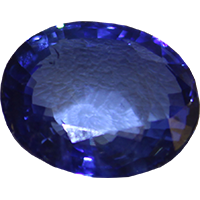 Sapphire
Although Sapphires are typically known for their pure blue color, "fancy" sapphires are also very popular, and occur in yellow, purple, pink, violet, orange and green. One of the most well known variants of sapphire is called padparadscha - a distinct pinkish orange color. A rare form of sapphire is a Star Sapphire - a type of Sapphire that exhibits a star-like phenomenon. Star Sapphires can occur in all colors, including Ruby, the red variant of Sapphire. Star Sapphire gemstones are not faceted, instead they are smoothed into cabochons to best show their special optical effect.
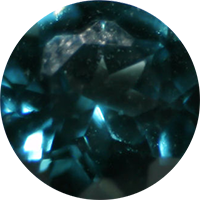 Spinel
Found in nearly every color, spinel varieties include pink, red, purple, and blue. Red spinel is often used an alternative for the more expensive Ruby. The most well known spinel is the Black Prince's Ruby, a large red spinel cabochon that sits in the front of the United Kingdom's royal crown.
 Tanzanite
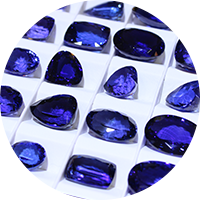
Tanzanite is a blue and violet gemstone only found in Tanzania. Tanzanite is known for its trichroism - as you rotate the stone, it will alternate in color from blue, to violet, to burgundy. Tanzanite can also appear differently when viewed under alternate lighting conditions. In its rough state Tanzanite is colored a reddish brown to clear, and it requires heat treatment to bring out the beautiful blue violet in the stone.
 Topaz
Topaz
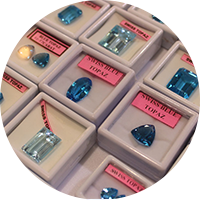
Topaz can be found in a wide variety of colors, but Topaz is most well known for its beautiful blue varieties. Blue Topaz ranges from light to dark blue, with the most well known varieties being Sky Blue (delicate blue), Swiss Blue (bright blue, the color of the Caribbean Sea), and London Blue (dark deep blue with a greenish tone). Topaz in its natural state is a golden brown to yellow, and almost all Blue Topaz is treated to bring out the more desired darker blue.
 Tourmaline
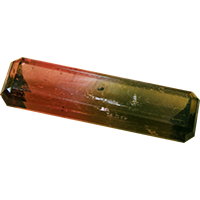
Tourmaline is a gemstone that comes in a wide variety of colors, including Green, Pink, Red and Blue. Tourmaline occurs naturally in elongated triangular columns that are either sliced into thin triangles, or cut into a gemstone shape. Bi-colored and multicolored tourmaline are highly sought out, with the most well known being "watermelon" tourmaline, which changes from red or pink to green. Another well known type of Tourmaline is Paraiba Tourmaline - a bright, electric blue type of Tourmaline that is very different than the more common red and green varieties.
 Turquoise
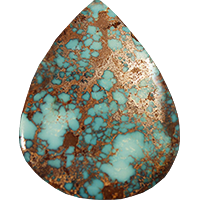
Turquoise is an opaque, blue-to-green mineral that has been used in religious and cultural ornamentation by Ancient Egyptians, Aztecs, and is still used today by many Native American tribes. Turquoise comes in a large variety of blue to green colors, and also can be found in many different textures. The most well known type of Turquoise is Sleeping Beauty Turquoise, which is a pure sky-blue color with no patterns or textures. Other interesting types of Turquoise include Blackweb Turquoise (blue Turquoise with a black spider web pattern), Kingman Turquoise, and Bisbee Turquoise. Turquoise is named by the mine it was found in, and each mine produces a different type of Turquoise.
 Zircon
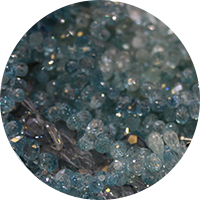
Zircon is a naturally-occurring gemstone, not to be confused with Cubic Zirconia. Zircon can appear in a wide variety of colors, including blue, green, brown, orange, and dark red. Because of its rarity, low price, and variety of beautiful colors, Zircon is a popular stone among jewelry collectors.
Best Places to Buy Gemstones
There are many places to buy gemstones around the world. No matter where you go, you need to ensure that you have someone who can verify if you are not an expert. Read More
Healing Gemstones
HEALING GEMSTONES Healing gemstones are delightful to give or receive as gifts. They are natural healers and are mother nature's gifts. Read More
Birthday Gemstones January 10th, 2012
BIRTHDAY GEMSTONES A birthday gemstone is also called a birthstone and associated to the month of our birth. Birthday stones have been given as birthday gifts from ancient times. Read More
riversreplads1996.blogspot.com
Source: https://jogsshow.com/gemstones/
0 Response to "What Purple Gemstone Exhibits Blue and Pink Hues of Color"
Enregistrer un commentaire